Paris doesn’t sleep. Not really. Even after the Eiffel Tower lights dim and the last metro train pulls out, the city keeps humming-quietly at first, then with a rhythm only those who’ve wandered its streets after midnight understand. This isn’t just about drinking or dancing. It’s about the slow sip of espresso at 2 a.m. in a corner café where the barista knows your name. It’s about the echo of accordion music drifting from a basement club in Montmartre, where the crowd isn’t there to be seen, but to feel something real.
The Legacy of the Cabaret
The Moulin Rouge opened in 1889, and with it, Paris gave the world a new kind of night. Not just entertainment, but rebellion dressed in feathers and sequins. The can-can wasn’t just a dance-it was a middle finger to the stiff norms of the day. Today, the Moulin Rouge still performs, but it’s no longer the only place where Parisian nightlife finds its soul. The real magic lives in the smaller spots: Le Chat Noir’s ghost still lingers in Montmartre, and venues like La Cigale and Le Trianon carry the torch with live music that leans into jazz, punk, and chanson.
These places aren’t tourist traps. They’re institutions. Locals show up for the same reasons they did a century ago: to lose themselves in sound, to laugh too loud, to feel alive when the rest of the world is asleep. The crowd at Le Bataclan might be younger now, but the energy is the same-raw, electric, unfiltered. You don’t go to a Parisian cabaret to check off a box. You go because the night demands it.
Where the Night Shift Begins
Most tourists think Paris shuts down after 11 p.m. They’re wrong. Around midnight, the real nightlife wakes up. In the 10th and 11th arrondissements, tucked between canal-side warehouses and old textile shops, a new wave of bars opens its doors. Le Comptoir Général feels like a forgotten attic filled with vintage books, mismatched chairs, and a DJ spinning Afrobeat. Bar de la Marine is a speakeasy-style hideout where the cocktails are named after French poets and the ice is hand-chipped.
These aren’t flashy clubs with velvet ropes. They’re places where the bartender remembers your drink without you having to say it. The music isn’t blasted-it’s curated. You might hear a 1960s French pop record one night, a lo-fi hip-hop mix the next. The rules? No phone screens. No posing. Just conversation, slow sips, and the quiet understanding that this is where Paris breathes.
The Late-Night Café Culture
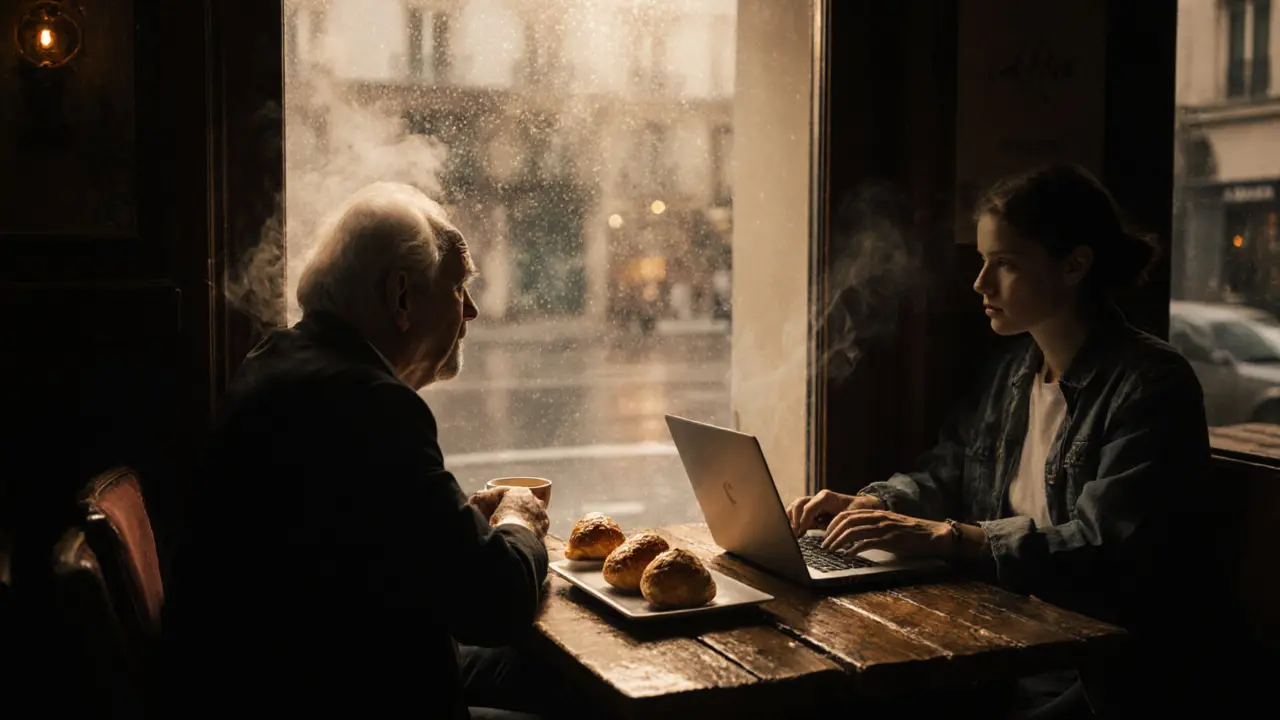
By 2 a.m., the bars thin out. But the cafés? They’re just getting started. Café de Flore and Les Deux Magots are famous, but they’re not where you’ll find the real night owls. Head to Café Charlot in Le Marais, where the espresso is strong, the pastries are warm, and the regulars include a retired opera singer, a graphic designer pulling an all-nighter, and a student writing a novel on a battered laptop.
These cafés don’t close until sunrise. Some don’t even have a posted closing time. The staff waits. They know the rhythm. You don’t need to order food. You don’t need to talk. Just sit. The light is dim. The coffee is bitter. The silence between people isn’t awkward-it’s comfortable. This is where Parisians go when they need to think, to grieve, to celebrate, or just to be alone in a crowd.
Hidden Gems and Local Secrets
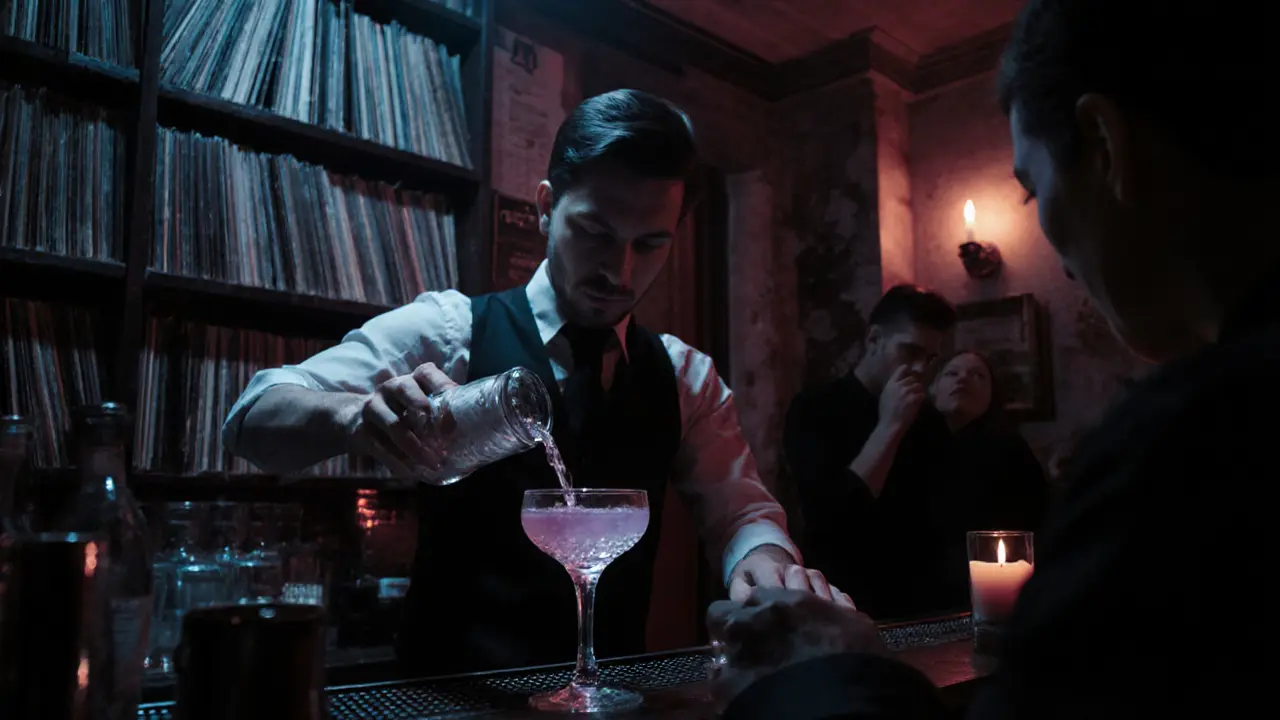
There’s a basement bar under a bookshop in the 13th arrondissement called Le Trésor. No sign. You have to know the code. The walls are lined with vinyl records from the 1970s. The drinks are made with house-infused spirits-lavender gin, smoked rosemary vodka. You won’t find this on any travel blog. You’ll only hear about it from someone who stayed out too late last week and didn’t want to go home.
Down by the Seine, near the Pont Alexandre III, there’s a tiny wine shop called Le Verre Volé that turns into a pop-up bar after 10 p.m. No chairs. Just wine poured into paper cups, and people standing on the sidewalk, laughing under string lights. It’s not fancy. It’s not Instagrammable. But it’s exactly what Parisian nightlife should be: unexpected, unpolished, and utterly human.
What You Won’t Find in Paris at Night
You won’t find neon-lit clubs with bottle service. You won’t find DJs spinning Top 40 hits on loop. You won’t find tourists lined up outside venues with bouncers checking IDs like they’re at a concert in Las Vegas.
Parisian nightlife isn’t about quantity. It’s about quality. About moments. About the way a single glass of natural wine tastes better when shared with someone you just met. About how a saxophone solo in a dimly lit room can make you cry without knowing why. About the fact that at 3 a.m., you can walk into a bakery, order a croissant, and have the baker ask if you’re okay.
This isn’t nightlife as a spectacle. It’s nightlife as a ritual. And it’s not for everyone. But if you’re willing to slow down, to listen, to wander without a map-you’ll find that Paris doesn’t just stay awake after dark. It comes alive.
When to Go and How to Move Around
The best nights for Parisian nightlife are Wednesday through Saturday. Weekdays are quieter, but that’s when you’ll find the real locals. Sunday nights are sacred-many bars close early, but the cafés stay open, and the streets feel like they belong to you alone.
Public transport stops running around 1:15 a.m. on weekdays and 2:15 a.m. on weekends. After that, you walk. Or you take a taxi. Or you hop on the Noctilien night buses, which run all night but are slow and sparse. The best way? Walk. Paris is small enough that you can wander from Montmartre to Le Marais in under an hour. And walking is how you find the places no guidebook mentions.
What to Wear
There’s no dress code. Not really. But Parisians notice. You don’t need a suit. You don’t need heels. But you also won’t see people in sweatpants and flip-flops unless they’re coming from the gym. Think clean, simple, intentional. A dark coat. A good pair of boots. A scarf. Something that says you’re ready for the night, not just passing through.
Final Thought: The Real Paris Is Awake
Most people come to Paris for the museums, the cafés, the Eiffel Tower. They leave having seen the postcard version. But the real Paris? It’s the one that wakes up when the sun goes down. It’s the place where strangers become friends over a shared bottle of wine. Where silence speaks louder than music. Where the night doesn’t end-it transforms.
If you want to understand Paris, don’t just visit. Stay up. Walk. Listen. Let the city surprise you. Because the art of Parisian nightlife isn’t about where you go. It’s about how you’re changed by the time you leave.
Is Paris nightlife safe at night?
Yes, Paris is generally safe at night, especially in tourist-friendly areas like Le Marais, Saint-Germain, and Montmartre. Stick to well-lit streets, avoid isolated parks after midnight, and be cautious with your belongings in crowded spots. The city has a strong police presence in nightlife districts, and most locals are helpful if you ask for directions. Violent crime is rare, but petty theft can happen-keep your phone and wallet secure.
What’s the best time to experience Paris nightlife?
The best nights are Wednesday through Saturday, when bars and live music venues are busiest. For a quieter, more authentic experience, try Sunday or Monday nights-locals hang out in cafés, and the streets feel more intimate. Avoid Friday nights if you dislike crowds; the 10th and 11th arrondissements get packed with tourists and students.
Do I need to speak French to enjoy Paris nightlife?
No, but a few basic phrases go a long way. Saying "Bonjour," "Merci," and "Une table, s’il vous plaît" earns you more smiles and better service. Most bartenders and waitstaff in popular areas speak English, but locals appreciate the effort. In hidden spots, especially in the 13th or 18th arrondissements, knowing French helps you connect deeper. Don’t be afraid to point, smile, or use gestures-Parisians are used to tourists.
Are there any free or low-cost nightlife options in Paris?
Absolutely. Many bars offer "happy hour" from 6-8 p.m. with discounted drinks. Some cafés have live acoustic music on Tuesday nights with no cover charge. Walk along the Seine after dark-street musicians often perform near Pont Neuf or Saint-Michel. Visit Le Verre Volé for wine by the glass, or join a free jazz session at La Cigale’s outdoor terrace in summer. The city’s culture thrives on low-cost, high-quality experiences.
What’s the difference between a Parisian bar and a nightclub?
Parisian bars are about atmosphere, conversation, and lingering. Nightclubs are rare and usually cater to tourists or party crowds. Most "nightclubs" in Paris are actually live music venues or underground dance spots with a specific vibe-jazz, techno, or electro. The real nightlife happens in bars where you can sit for hours, sip wine, and talk. If you’re looking for dancing, go to La Bellevilloise or Le Trabendo, but expect small crowds and curated playlists, not EDM bangers.